.png)
The flow of energy through an ecosystem starts with the sun. Plants use light from the sun, and carbon dioxide to make food or glucose for them selves, this process is called photosynthesis. Organisms that can make their own food like plants are called Producers and they are on the bottom of the food chain.
Producers use most of the energy they make for themselves, but the energy they don’t use gets passed on when they get eaten or consumed. Organisms that can not make their own energy and depend on producers for energy are called consumers. Above producers on the energy pyramid is primary consumers. Primary consumers are herbivores, or plant eaters, and most of the energy they get from producers they use up.
The extra energy that the primary consumers don’t use up is then used by another consumer, secondary consumers. Secondary consumers are carnivores or predators; they gain this energy when they eat secondary consumers. They gain much less energy and have to eat much more, because the higher up on the energy pyramid the less energy is available for consumption. Energy is also moved into the environment and taking the form of heat.
The last level on the energy pyramid is tertiary consumers, they have the least amount of energy, because at every tropic level more energy is lost. They have to eat much more to gain the same amount of energy as the primary consumers.
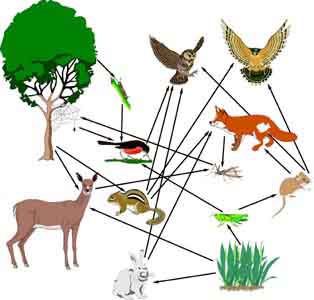
Food Web
Infornmation for this page was provided by
ports.parks.ca.gov/pages/22922/files/lesson2_slides_energyflow.ppt
